What Is SD-WAN? How Software-Defined WAN Works
SD-WAN — software-defined wide area network — is how multi-site businesses replace expensive, rigid WAN circuits with software-controlled connectivity across broadband, 4G/LTE, fiber, and MPLS links. Instead of hardcoding routing decisions into each branch device, a central controller manages policy across every site. The result is lower bandwidth costs, consistent security, and better performance for the cloud applications distributed teams depend on.
Use this guide to learn what SD-WAN is, how it evolved from traditional WAN and MPLS, how it works in practice, and when it makes sense for your environment.
Key Takeaways
- SD-WAN is a software-based approach to WAN routing that uses multiple link types (broadband, 4G/LTE, MPLS) and intelligent path selection to connect branch offices, data centers, and cloud applications.
- It evolved from traditional WAN and MPLS, using a software overlay instead of dedicated circuits to connect distributed sites.
- Core benefits include lower bandwidth costs, centralized management, faster deployment of new sites, better cloud application performance, and resilient failover.
- Main use cases include multi-site businesses, MSP-managed client networks, branch-heavy retail and hospitality operations, and cloud-first offices.
What Is SD-WAN?
SD-WAN is a virtual WAN architecture that uses software to route traffic across multiple transport links — broadband, 4G/LTE, fiber, and MPLS — rather than relying on a single dedicated circuit. The "software-defined" part means that routing decisions, security policy, and traffic prioritization are managed centrally in software and applied uniformly across every branch, not configured individually on each piece of hardware.
In a traditional WAN, adding a new site or changing a routing policy requires hands-on hardware configuration at each location. In an SD-WAN environment, an administrator defines policy once in a central controller and pushes it across every connected site simultaneously.
How WAN Evolved to SD-WAN
Understanding why SD-WAN exists requires a short look at what came before it. Each generation of WAN technology solved the problems of its era — until the next set of problems arrived.
Traditional WAN
The original wide area network was built on leased lines and private circuits: dedicated physical connections rented from telecommunications providers, linking branch offices to central headquarters. This model worked well for its time. Traffic flows were predictable, applications ran on-premises, and branches needed reliable access to centralized data and file servers.
The limitations were structural. Leased lines were expensive, slow to provision (often requiring weeks or months of lead time), and purpose-built for the traffic patterns of an earlier era. They were not designed for cloud-bound traffic or for organizations whose workforce and applications were spreading beyond a central office.
MPLS
Multiprotocol Label Switching, or MPLS, became the standard private-WAN technology for businesses that needed more performance and reliability than the public internet could offer. MPLS circuits provide dedicated bandwidth, predictable latency, and strong quality-of-service guarantees, all managed by the carrier.
The tradeoff was cost and architecture. MPLS is carrier-provisioned, meaning new circuits take time and budget to establish. More importantly, MPLS architecture typically routes all traffic — including cloud-bound traffic — back through a central hub location before sending it to its destination. As organizations adopted SaaS platforms, that design created a new bottleneck: a branch office employee accessing Microsoft 365 or Salesforce would see their traffic travel from the branch to HQ over MPLS, then out to the internet, adding latency at every hop.
The Shift to SD-WAN
SD-WAN emerged as a direct response to the architectural mismatch between MPLS-era networks and cloud-first workloads. The rise of SaaS, public cloud platforms, and distributed workforces made hardware-centric, single-transport WANs a limiting factor rather than an enabler.
SD-WAN addressed this by decoupling the network control plane from the physical hardware and placing it in software. Branches could now use multiple transport types simultaneously — combining broadband, 4G/LTE, and MPLS — with software making intelligent routing decisions based on real-time link conditions. Cloud-bound traffic could go directly to its destination without backhauling through headquarters, and policy could be managed from a central controller rather than configured on a device-by-device basis.
How SD-WAN Works
SD-WAN is built on four interacting components and two topology models that together make multi-site connectivity more intelligent and manageable. Each component handles a distinct function in the overall architecture, and how those components connect — whether through a central hub or direct site-to-site tunnels — shapes how traffic flows across the network.
SD-WAN Architecture
An SD-WAN deployment consists of four components working together:
- Edge devices: Branch routers or gateways installed at each location. These handle the actual forwarding of traffic, enforce local policies, and maintain VPN tunnels to other sites.
- Transport links: The physical connections carrying traffic between sites and to the internet. These can include broadband, fiber, 4G/LTE, 5G, and MPLS circuits. SD-WAN can use multiple links simultaneously at a single location.
- Centralized controller: The software component that manages routing policy, security rules, QoS settings, and VPN configurations across all sites. Administrators interact primarily with the controller rather than configuring each edge device individually.
- Orchestrator: The management layer that handles onboarding of new devices, policy distribution, and visibility across the entire deployment. In many implementations, the controller and orchestrator functions are combined in a single platform.
SD-WAN topologies can be deployed in two primary configurations.
In a hub-and-spoke model, branch sites connect back to a central hub location (typically a main office or data center), with spoke-to-spoke traffic routed through the hub.
In a full-mesh model, every site maintains direct VPN tunnels to every other site, eliminating the hub as a transit point and reducing latency for branch-to-branch traffic.
The right topology depends on traffic patterns, the number of sites, and whether branch offices communicate frequently with each other or primarily with centralized resources.
Intelligent Path Selection
SD-WAN continuously monitors each available transport link for latency, jitter, and packet loss, and routes each application over the best-performing path in real time. This is fundamentally different from traditional WAN, where a single link carries all traffic and failover (if it exists at all) is triggered manually or by simple link-down detection.
In practice, path selection means that latency-sensitive traffic like VoIP calls can be steered toward the lowest-latency available link, while bulk transfers like nightly backups route over secondary links during off-peak hours. When link quality degrades, SD-WAN can redirect traffic to a healthy path without administrator intervention.
Centralized Management and Policy
One of SD-WAN's most operationally significant capabilities is that routing, security, and Quality of Service (QoS) policy is defined once and applied everywhere. An administrator configures the rules in the central controller, and those rules propagate to every edge device across all sites.
For IT managers running multi-site networks with limited staff, or MSPs managing dozens of client environments, this centralized model directly reduces operational overhead. A policy update that might require hours of per-device configuration in a traditional environment takes minutes when pushed from a single controller.
Built-In Security and Encryption
SD-WAN traffic between sites is encrypted using IPsec, creating secure tunnels across whatever transport links are in use, including the public internet. Because SD-WAN often replaces or supplements expensive private circuits with broadband connections, encryption is not optional: it is a foundational requirement for routing business traffic over shared infrastructure.
Beyond encryption, SD-WAN implementations typically include firewall and access control capabilities at the edge, and can integrate with cloud-based security services for organizations that need consistent policy across direct internet breakout connections. This is particularly relevant for MSPs and system integrators who need one security posture applied uniformly across every client site.
Benefits of SD-WAN
The operational benefits of SD-WAN map directly to the architectural improvements it delivers over traditional WAN and MPLS.
- Lower bandwidth costs. Replacing or supplementing expensive MPLS circuits with broadband and LTE links reduces recurring WAN spending. Businesses retain MPLS where SLA guarantees are required, while routing bulk traffic over lower-cost alternatives.
- Better performance for cloud and SaaS applications. Direct-to-internet breakout removes the MPLS-to-HQ backhaul path that adds latency for cloud traffic. Branch users reach cloud applications on a more direct route.
- Resilient failover across multiple links. When one transport link degrades or fails, SD-WAN redirects traffic to a healthy link without taking the site offline. Multi-link deployments eliminate single points of failure at each location.
- Centralized management across all sites. One controller manages routing, security, and QoS policy for every site. Changes take effect across the entire network without per-site configuration.
- Faster onboarding of new sites. Zero-touch provisioning replaces manual per-site configuration. A new branch can be brought online by shipping a pre-configured gateway to the site and having on-site staff connect it to the internet — no on-site IT expertise required.
- Scalability as a software action. Adding a new branch location is primarily a software and licensing step rather than a procurement and circuit provisioning cycle. This is a significant advantage for businesses that open new locations frequently.
How Businesses Use SD-WAN
SD-WAN delivers its clearest value in distributed environments. The scenarios below cover the deployment contexts where it sees the most practical adoption: multi-site businesses, service providers managing client networks, and organizations looking for a more cost-effective alternative to legacy WAN infrastructure.
Multi-Site Small and Mid-Market Businesses
Consider an architecture or legal firm with three to ten offices, each needing consistent access to shared applications, file servers, and cloud platforms. Without SD-WAN, each location requires independent WAN configuration, separate security policies, and on-site IT visits for changes. With SD-WAN, all offices connect to the same centralized controller, share a consistent security posture, and can be managed remotely.
For IT managers running multi-site infrastructure with limited staff, the ability to push a policy change to every office simultaneously and monitor WAN health across all locations from a single dashboard directly reduces the operational burden of managing distributed networks.
MSP-Managed Client Networks
Managed service providers operating across dozens of client networks gain significant efficiency from SD-WAN's centralized architecture. With a cloud-based controller and MSP mode for multi-customer management, a service provider can monitor every client site from a single interface, deploy new sites using zero-touch provisioning without dispatching an engineer, and apply consistent security and routing policies across the entire client base.
Retail, Hospitality, and Franchise Chains
A retail chain or hotel group operates with an inherently distributed network. Each location needs cloud-connected POS systems, guest Wi-Fi, back-office applications, and reliable uptime — and policy needs to be consistent across every site.
SD-WAN addresses this with centralized policy management and multi-link failover. If a location's primary internet connection drops, a secondary 4G/LTE link keeps POS terminals and payment processing online. Security policy, including network segmentation between guest and operational traffic, applies uniformly without manual configuration at each property.
Cloud-Heavy and Hybrid Offices
Organizations that have moved most of their workloads to SaaS platforms like Microsoft 365, Google Workspace, or Salesforce benefit most from SD-WAN's direct-to-cloud routing capability. When the majority of an office's traffic is cloud-bound, routing it through a central HQ or data center adds unnecessary latency without providing security or management benefits.
SD-WAN enables direct internet breakout at the branch, where traffic goes from the edge device to the cloud application on the shortest available path, while still applying a consistent security policy and maintaining encrypted connectivity to other company sites.
SD-WAN vs. MPLS: A Quick Comparison
MPLS still serves a role in environments where predictable latency, carrier-backed SLAs, and strict QoS guarantees are required. But for most multi-site SMB and mid-market deployments, SD-WAN is the pragmatic choice: more flexible, more cost-effective, and far better suited to cloud-first traffic patterns.
| Feature | MPLS | SD-WAN |
|---|---|---|
| Transport | Single, carrier-provisioned private circuit | Multiple transport types: broadband, 4G/LTE, MPLS, fiber |
| Cost | High recurring circuit costs | Lower — leverages commodity broadband alongside or instead of MPLS |
| Deployment time | Weeks to months for new circuits | Days — zero-touch provisioning on commodity hardware |
| Cloud performance | Traffic backhauled through HQ adds latency | Direct-to-cloud breakout at the branch |
| Path redundancy | Single path; failover depends on carrier SLA | Active monitoring across multiple links; automatic path failover |
When Should You Consider SD-WAN?
SD-WAN is the right architecture for some environments and unnecessary overhead for others. The criteria below help clarify which side of that line your organization falls on.
SD-WAN is a strong fit when:
- Your organization has two or more locations that need consistent connectivity and shared policy.
- You have moved significant workloads to SaaS or cloud platforms and find that cloud application performance is a friction point.
- You are managing (or planning to manage) multiple client networks and need centralized visibility and control.
- You have an expiring MPLS contract and are evaluating lower-cost alternatives.
- You need new branch locations deployed quickly without dispatching IT staff on-site.
SD-WAN may not be the right call when:
- You operate from a single location with no branch connectivity requirements.
- Your network workloads are entirely on-premises with no cloud dependencies.
- Your industry or contracts require carrier-backed MPLS SLAs that SD-WAN cannot replicate.
If your situation fits the first group, the practical starting point is gateway and router hardware that supports SD-WAN functionality natively combined with a cloud-based controller to manage multiple sites from a single interface.
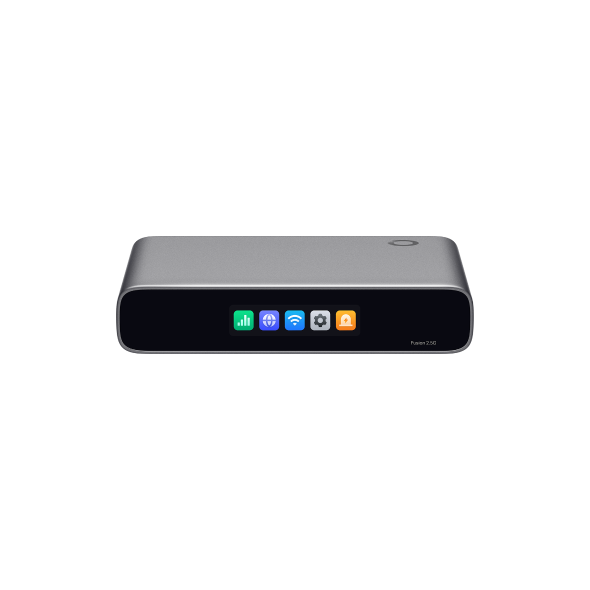
Omada's wired gateways support SD-WAN with centralized management through the Omada Controller, while Fusion Gateways add full-mesh SD-WAN alongside built-in centralized management in a single platform.
Building Your Multi-Site Network with Omada
SD-WAN is a modern, multi-transport alternative to MPLS that centralizes management, improves cloud application performance, and scales easily across branch locations. For growing multi-site businesses and MSPs, it is the architecture that makes enterprise-grade connectivity practical without enterprise licensing costs.
For organizations ready to deploy SD-WAN principles at SMB scale, Omada's standard gateway lineup includes select wired and wireless models with native SD-WAN support, multi-WAN load balancing, and IPsec/WireGuard/SSL VPN capabilities.
Fusion gateways build on these capabilities with full-mesh SD-WAN and built-in centralized management in a single platform.
Paired with Omada's cloud-based controller, standard gateways — or the integrated management capabilities of Fusion gateways — support multi-site VPN setup and centralized policy management across connected locations.
For a deeper look at how Omada's SDN controller manages multi-site networks, see An Introduction to Omada SDN Controller.
Frequently Asked Questions
What is SD-WAN used for?
SD-WAN is used to connect multiple business locations over a combination of transport links, including broadband, 4G/LTE, and MPLS. It centralizes routing, security, and QoS policy management across all sites and improves performance for cloud and SaaS applications by enabling direct-to-internet breakout at each branch.
What is SD-WAN vs. regular WAN?
A traditional WAN connects sites over a single dedicated transport circuit, typically a leased line or MPLS connection, with routing configured individually on each piece of hardware. SD-WAN replaces or supplements that with a software layer that manages routing decisions centrally and can use multiple transport types simultaneously, providing path redundancy, lower costs, and consistent policy across sites that traditional WAN cannot.
What is the difference between MPLS and SD-WAN?
MPLS is a carrier-provisioned private circuit technology that delivers predictable performance and strong QoS guarantees, but at high cost and with limited flexibility for cloud traffic. SD-WAN uses software to route traffic intelligently across multiple link types and supports direct-to-cloud routing at the branch. For most multi-site SMB environments, SD-WAN delivers lower costs and better cloud performance; MPLS retains value where carrier SLAs are contractually required.
Is SD-WAN the same as SDN?
SD-WAN and SDN (software-defined networking) share the same core principle — separating the control plane from the data plane and managing it centrally in software — but they operate at different scopes. SDN is a broader networking architecture that can apply to local networks, data centers, and campus environments. SD-WAN applies those software-defined principles specifically to wide area network connectivity across geographically distributed sites.
Do small businesses need SD-WAN?
Single-location small businesses with straightforward connectivity needs typically do not need SD-WAN. The technology delivers its value in multi-site environments where centralized management, WAN failover across multiple links, and consistent policy across branches make a measurable operational difference. For a small business with two or more locations, especially those using cloud-first applications, SD-WAN provides capabilities that are difficult to achieve with traditional per-site WAN configurations.