


Industrial Switches
for Business Networks
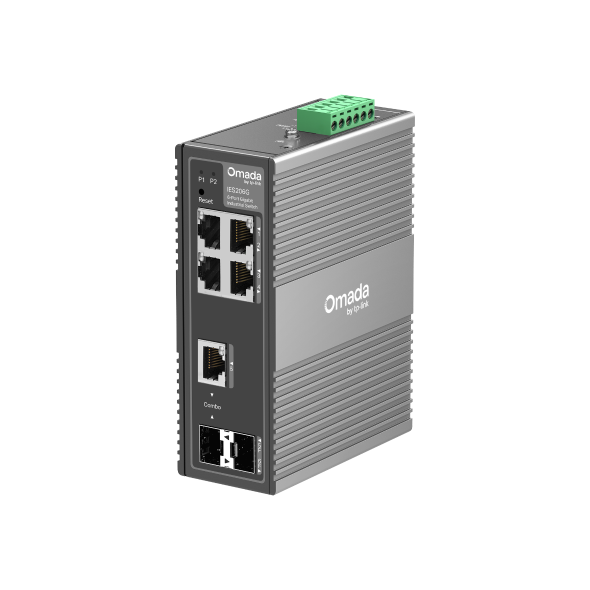
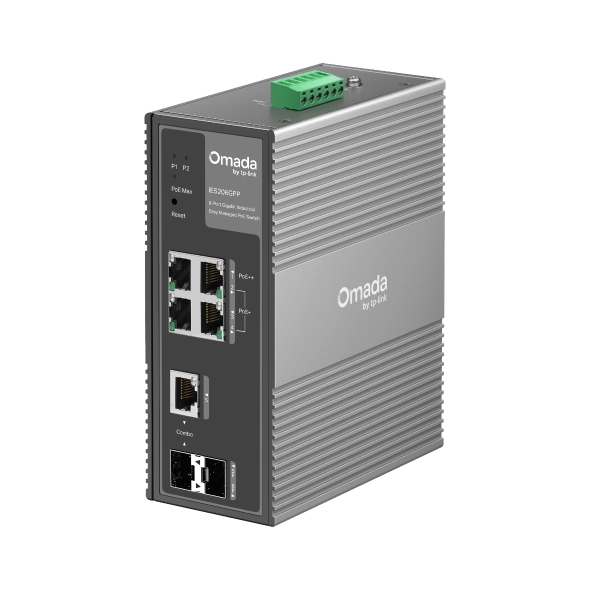
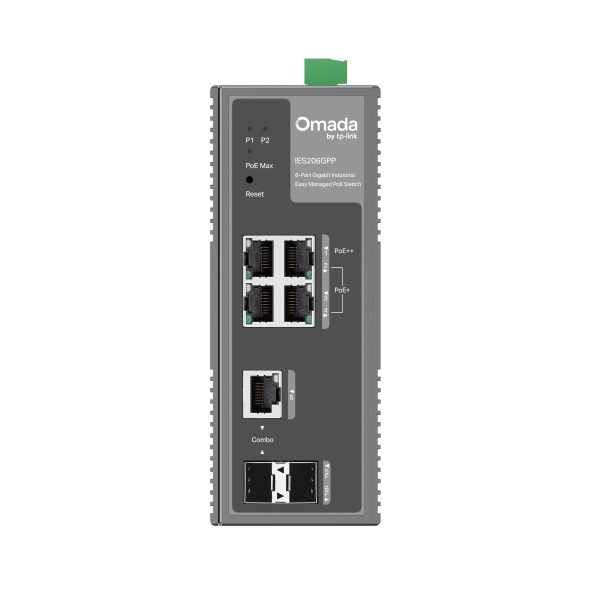
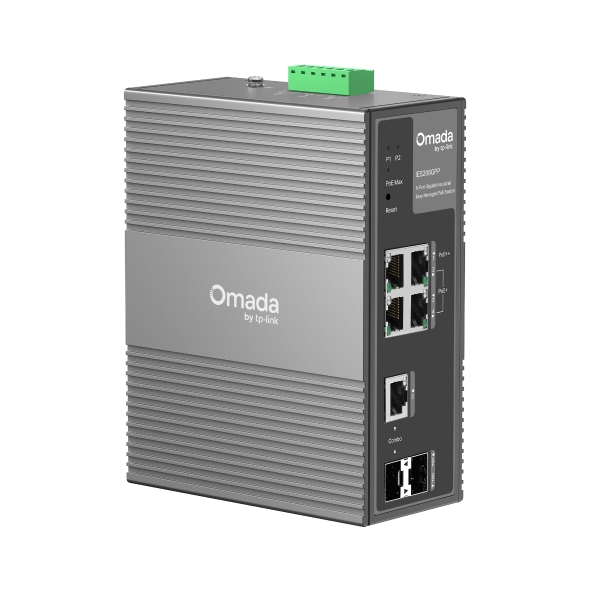
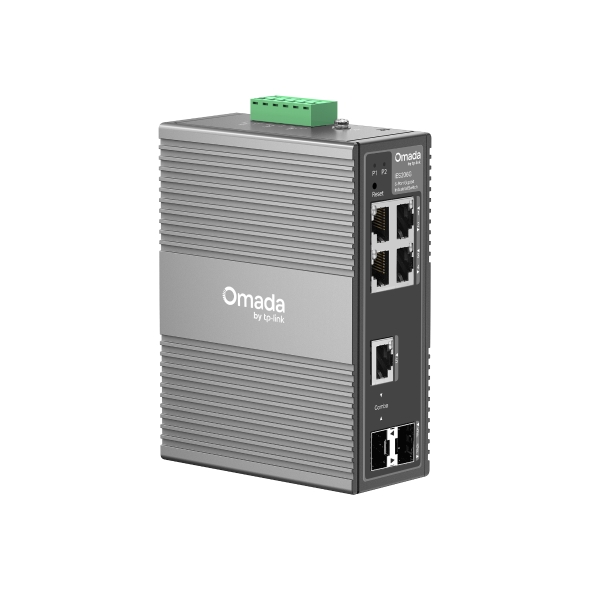
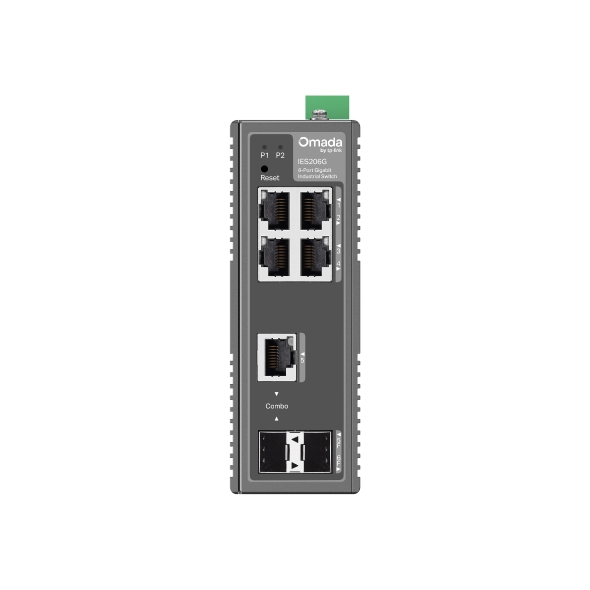
Omada industrial switches provide reliable gigabit connectivity in environments where standard networking equipment can't operate. Built with IP40 aluminum casing, a -40 ℉ to 167 ℉ operating temperature range, and 6kV lightning protection, these fanless switches withstand installations where heat, electrical interference, and continuous uptime are non-negotiable.

 |
 |
 |
 |
|
|---|---|---|---|---|
|
|
||||

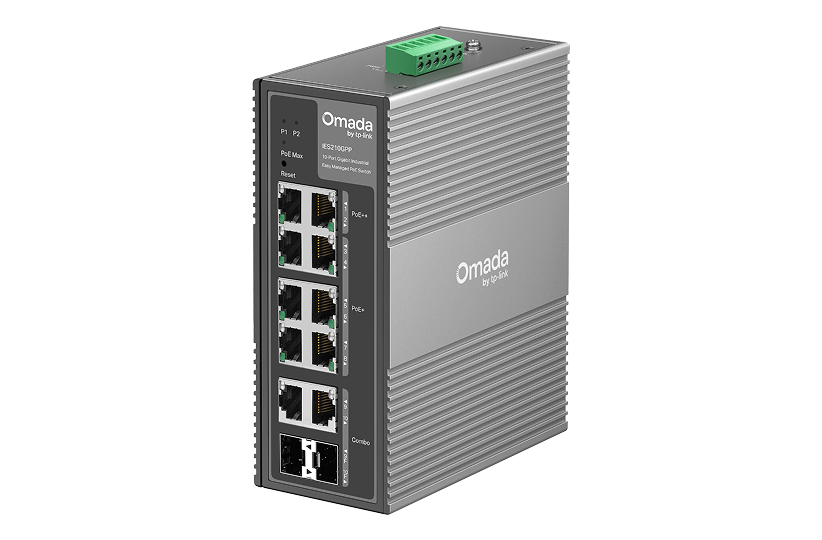
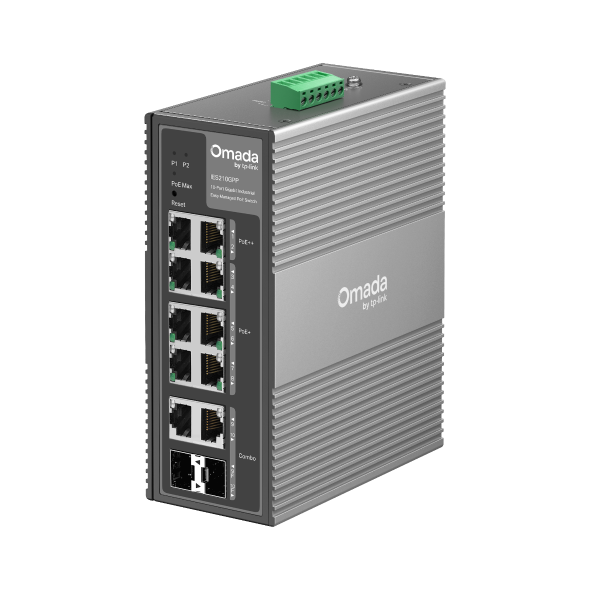
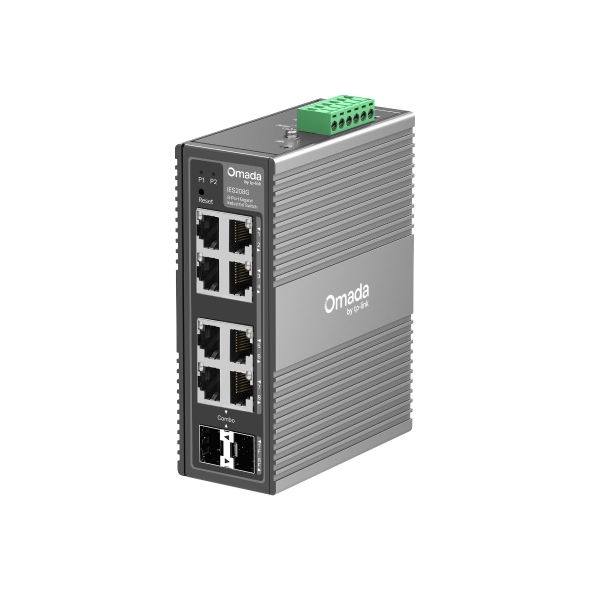
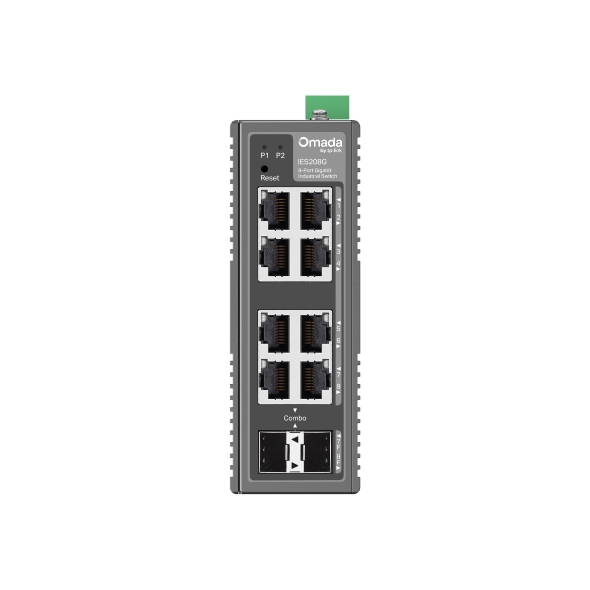
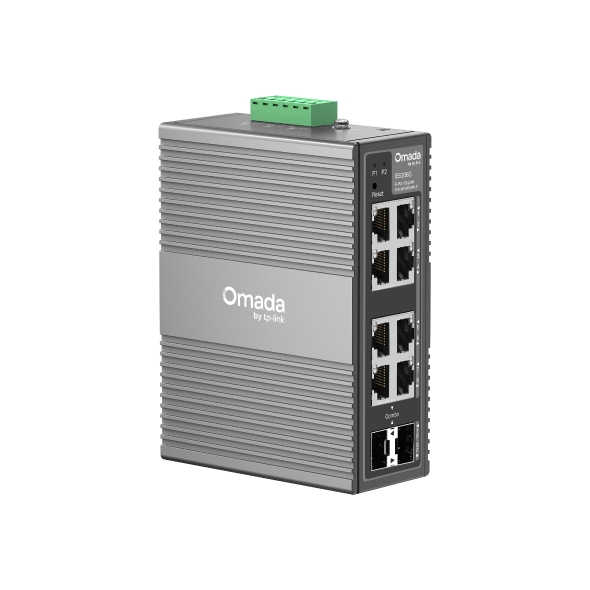
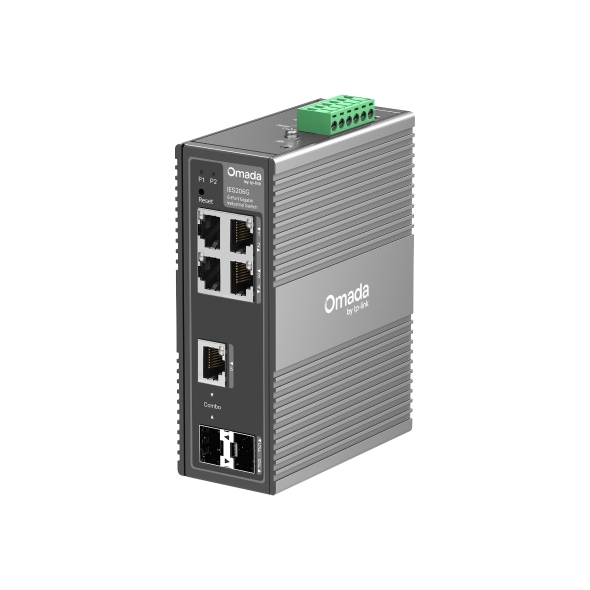
Total Port Count |
10 |
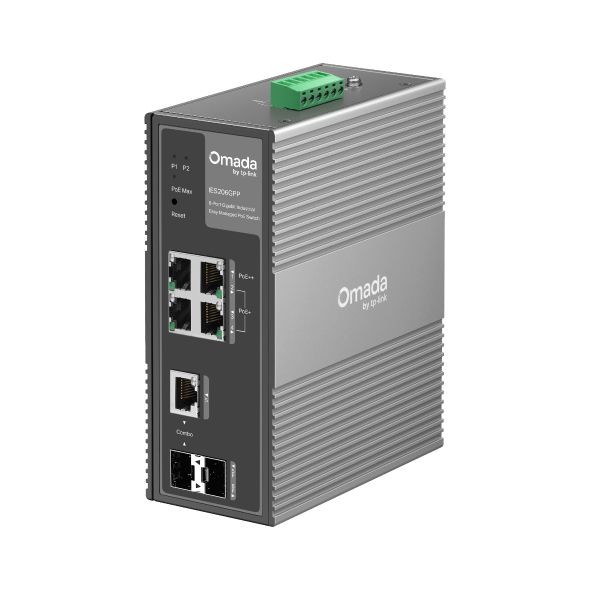
6 |
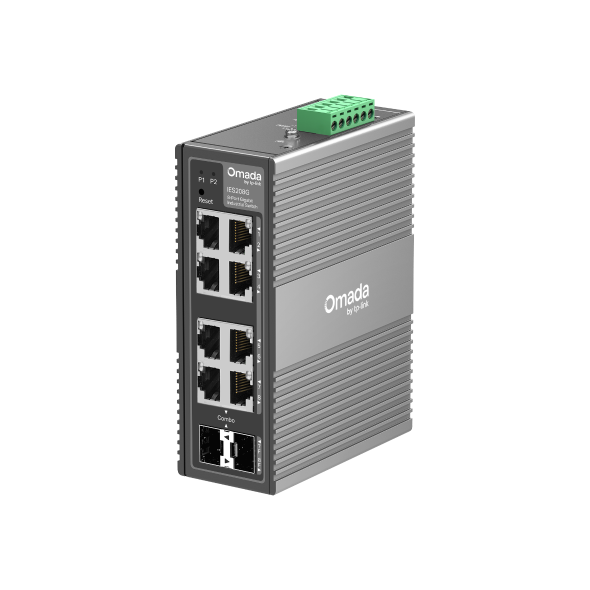
8 |
6 |

Downlink Port |
(2) GbE PoE++ Ports |
(1) GbE PoE++ Port |
(6) GbE Ports |
(4) GbE Ports |

Uplink Port |
(2) 1G RJ45/SFP Combo Ports |
(1) 1G RJ45/SFP Combo Port |
(2) 1G RJ45/SFP Combo Ports |
(1) 1G RJ45/SFP Combo Port |

PoE Budget |
60W (Input: 12-20V) |
60W (Input: 12-20V) |
- |
- |

Power Supply* |
1+1 12-57V DC Input |
1+1 12-57V DC Input |
1+1 9.6-60V DC Input |
1+1 9.6-60V DC Input |

Operating Temperature |
-40 – 75 ℃ |
-40 – 75 ℃ |
-40 – 75 ℃ |
-40 – 75 ℃ |

Fan |
Fanless |
Fanless |
Fanless |
Fanless |

Mounting |
DIN-rail, Wall-mount |
DIN-rail, Wall-mount |
DIN-rail, Wall-mount |
DIN-rail, Wall-mount |
*Power adapter is not included.







Business Benefits

Made for Harsh Environments
Industrial-grade IP40 aluminum enclosures and a -40℉ to 167℉ operating temperature range make these switches suitable for factory floors, outdoor cabinets, and facilities where temperature extremes and dust exposure would compromise standard hardware.

Protection Against Electrical Surges
6kV lightning protection guards connected equipment against the electrical interference common in industrial and harsh environments, reducing the risk of hardware damage and unplanned downtime.

Continuous Operation
Dual 1+1 DC power inputs keep your network running if one power source fails, so a single point of failure never becomes a business disruption.

PoE Support for Cameras and Wireless Equipment
Select models deliver PoE+ and PoE++ to power IP cameras and access points through network cables, with extended reach to reduce infrastructure costs across large facilities.

Abundant Features
VLAN, QoS, and STP/RSTP support gives integrators and administrators control over traffic segmentation, priority, and loop prevention, keeping surveillance, automation, and general traffic from competing for the same bandwidth.

Fanless, Silent Operation
No cooling fans means fewer moving parts to service and quieter operation — practical for installations in equipment cabinets or environments where maintenance access is limited.

Part of the Omada Ecosystem
Industrial switches integrate with managed switches, gateways, and access points under the Omada Controller, manageable via web browser or the Omada app.
Solving Connectivity Challenges
Omada industrial switches fit deployments where reliability in harsh conditions matters as much as network performance.

PoE models power IP cameras across large facilities through a single cable run, with extended reach reducing the need for intermediate power sources in warehouses, parking structures, and campuses.
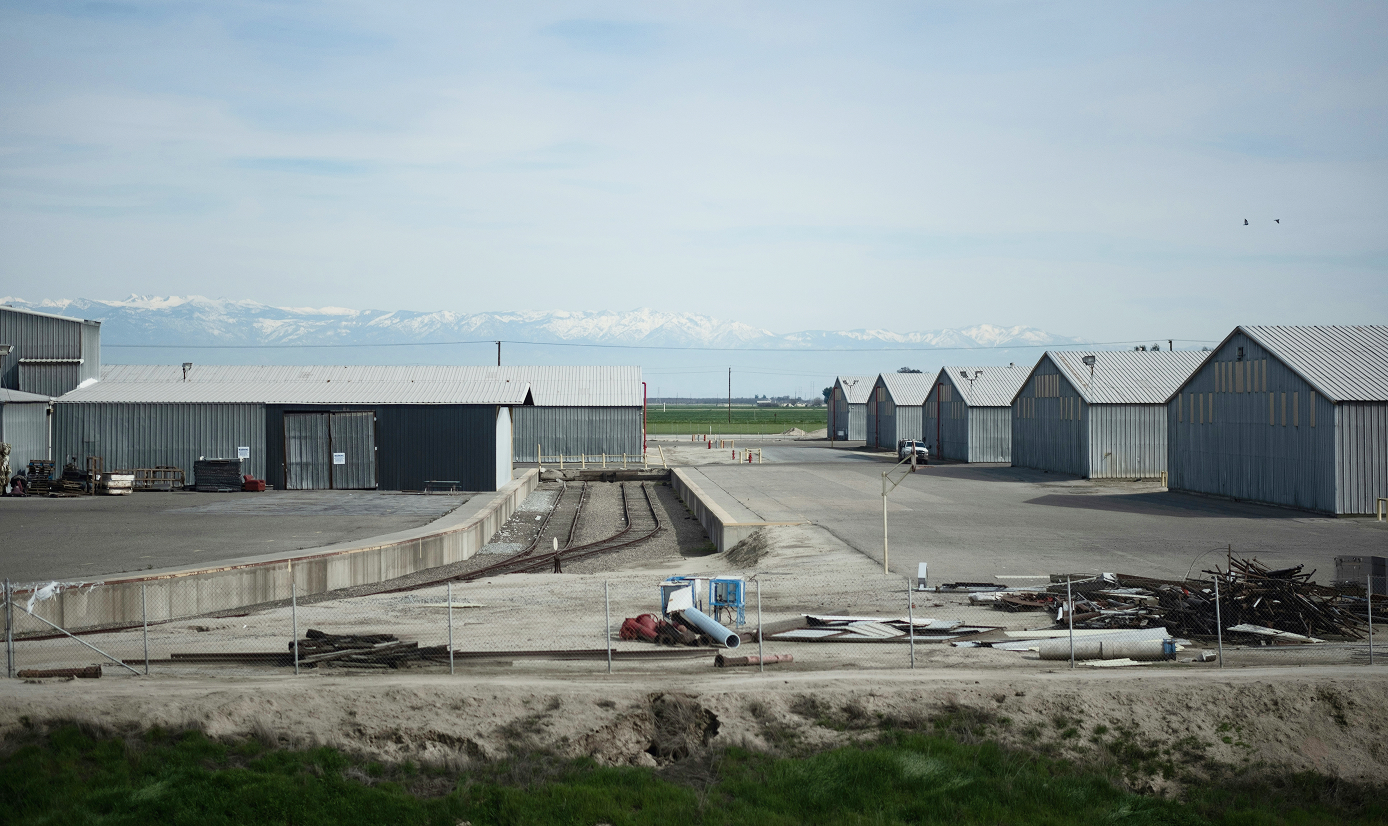
Fanless aluminum construction and wide operating temperature support continuous operation on factory floors where heat, vibration-adjacent electrical noise, and uptime requirements rule out standard switches.

Power facilities and substations expose networking equipment to electrical surges and unstable voltage. Redundant DC power inputs and 6kV lightning protection keep switches running reliably.
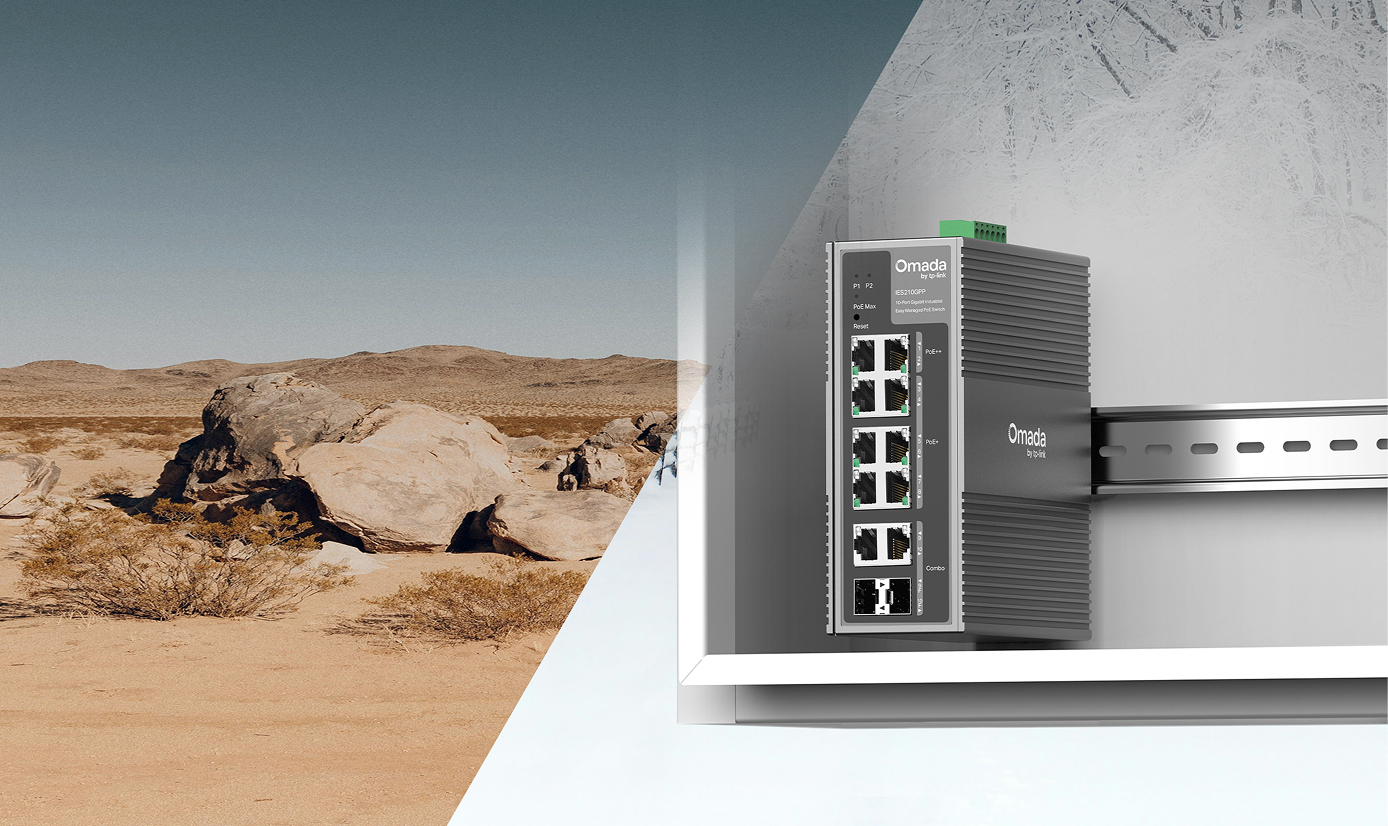
DIN-rail and wall-mount options allow deployment inside outdoor cabinets, extending network connectivity to remote locations without requiring a climate-controlled equipment room.
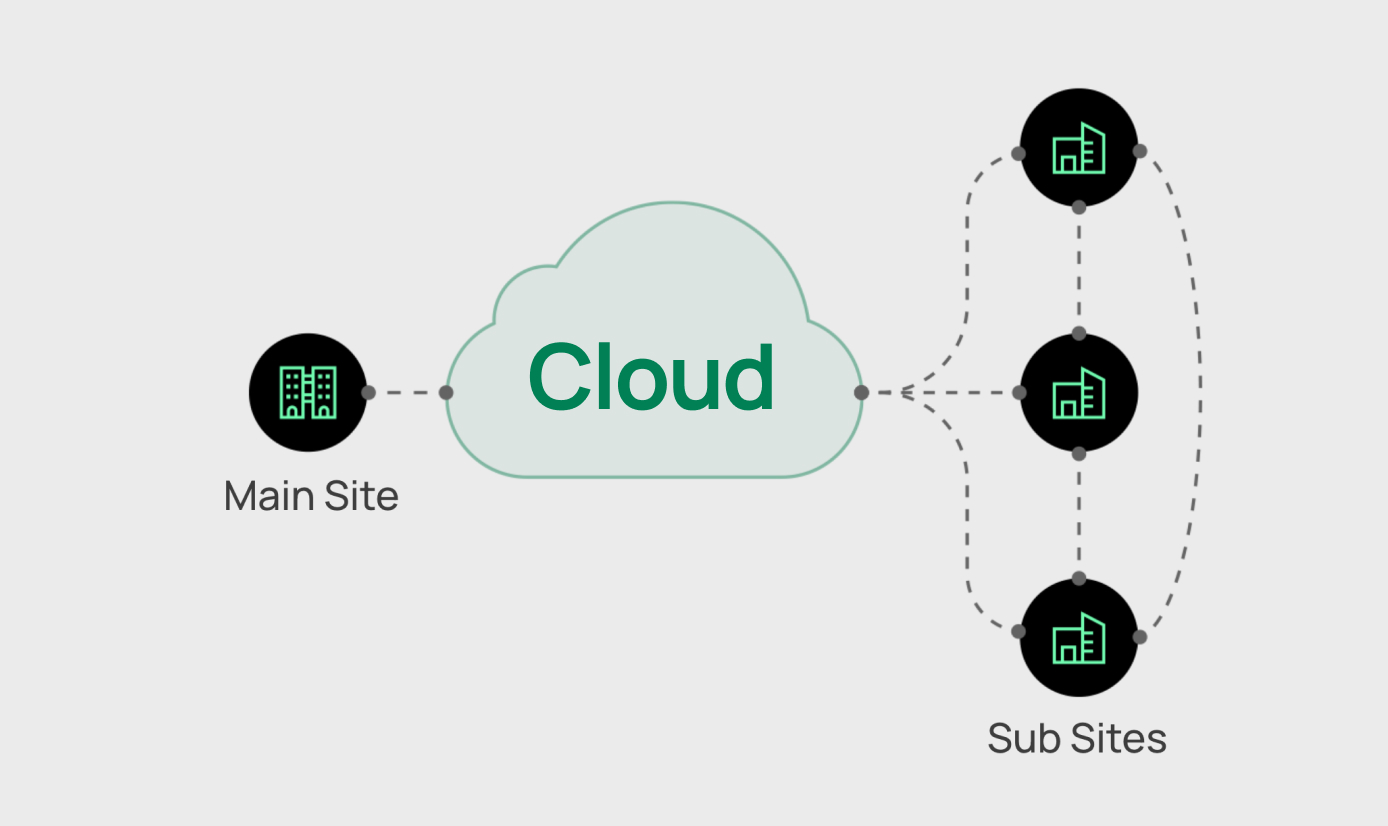
Manage industrial switches from a single Omada interface.
FAQs
What makes an Ethernet switch "industrial"? 
Industrial switches are made to operate in conditions that would damage or destabilize standard networking hardware. Omada industrial switches feature IP40 aluminum enclosures, a -40 ℉ to 167 ℉ operating temperature range, 6kV lightning protection, and redundant DC power inputs. Omada industrial switches are purpose-built for factory floors, outdoor cabinets, and other demanding environments.
What operating temperature range do industrial switches support?
All Omada industrial switch models support an operating temperature range of -40 ℉ to 167 ℉, making them suitable for both extreme cold and high-heat industrial environments.
Are industrial switches suitable for outdoor or factory deployments?
The IP40-rated aluminum casing, wide operating temperature range, 6kV lightning protection, and DIN-rail or wall-mount options make Omada industrial switches appropriate for outdoor electrical cabinets, factory floors, and other harsh installation environments.
Do industrial switches support PoE for cameras and wireless access points?
Select Omada industrial switch models include PoE+ and PoE++ ports to power cameras, access points, and other network devices through a single cable. An extended PoE mode supports cable runs up to 820ft (250m) for large facilities. See Omada PoE solutions for more detail, and check individual model specifications for PoE budget and port availability.
What is the difference between industrial managed and unmanaged switches?
Omada industrial switches are Easy Managed models, which are designed for daily operation without enterprise-level complexity. They support VLAN, QoS, STP/RSTP, and PoE management, and are centrally managed via the Omada app or web interface. This gives administrators control over traffic segmentation, priority, and network monitoring. These capabilities are not available on unmanaged switches, which operate plug-and-play without configuration options.
Do industrial switches support redundant power inputs?
All Omada industrial switch models include dual 1+1 DC power inputs (power adapter is not included), so the network keeps running if one power source fails or requires servicing.