


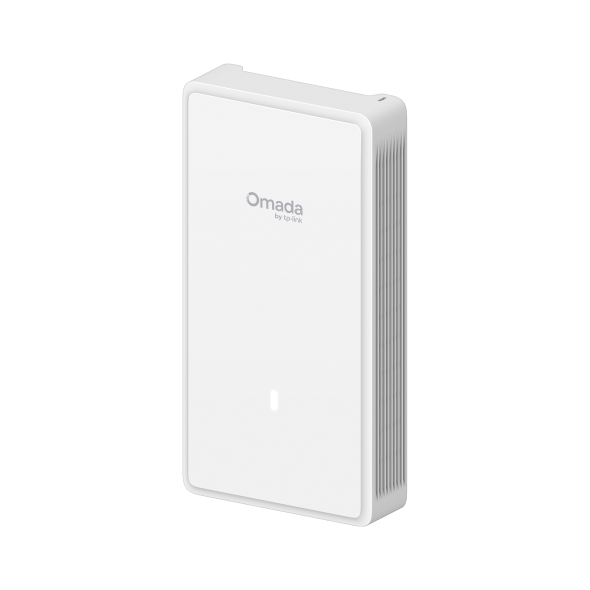
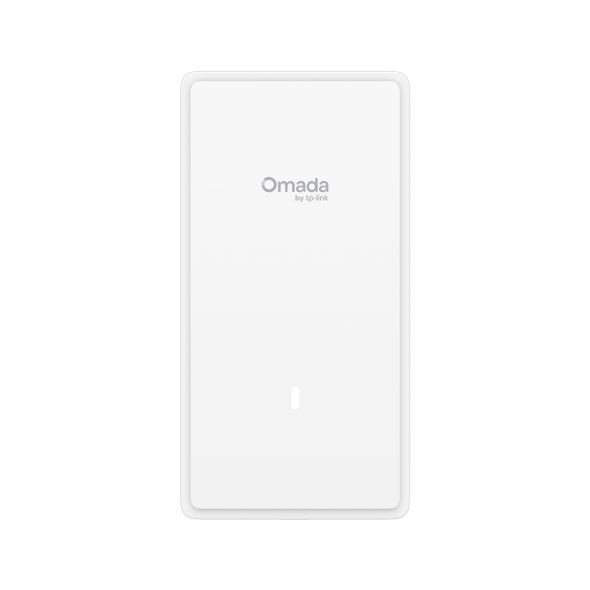
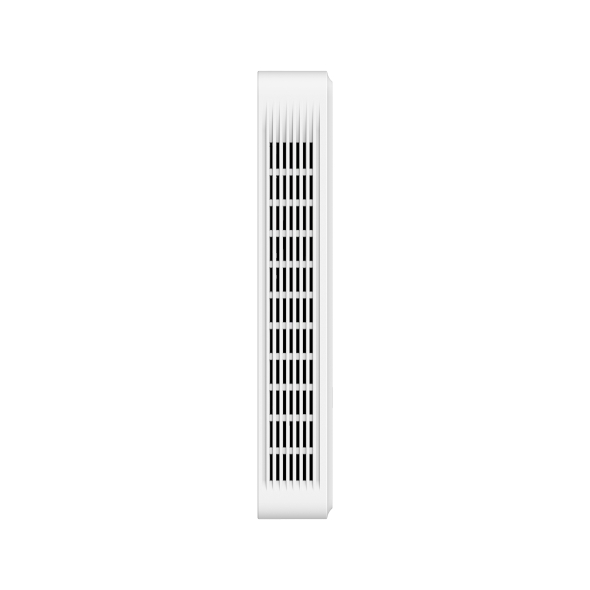
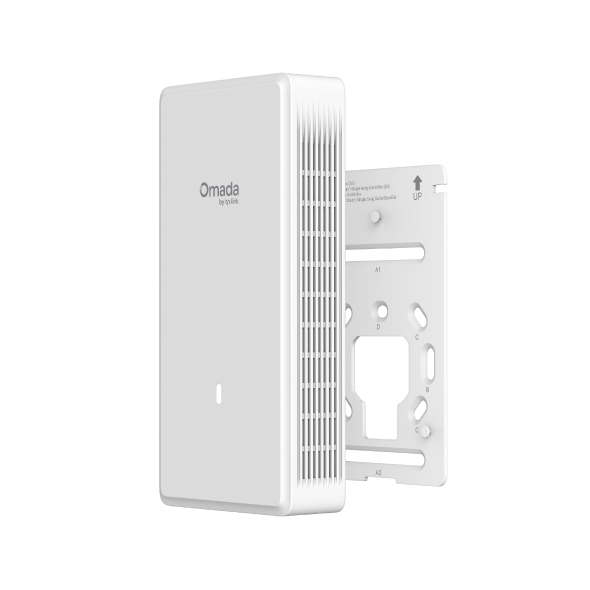
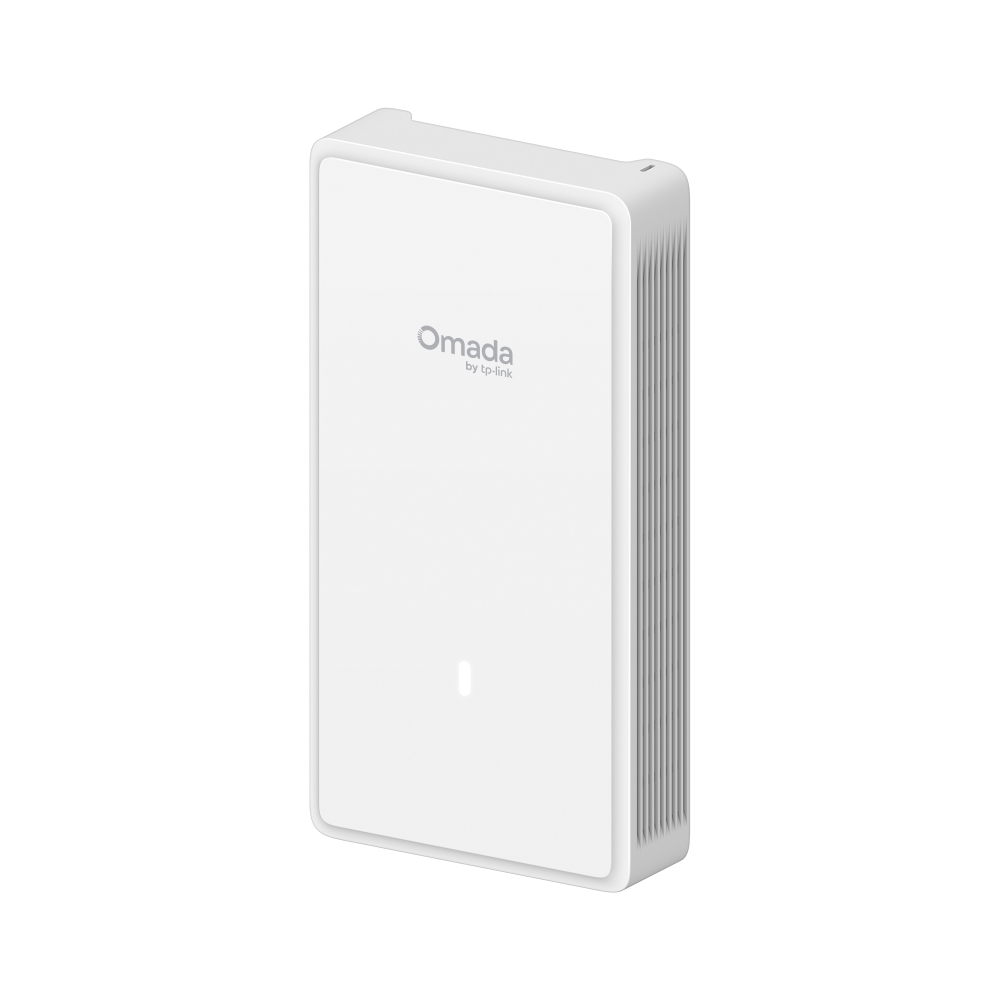
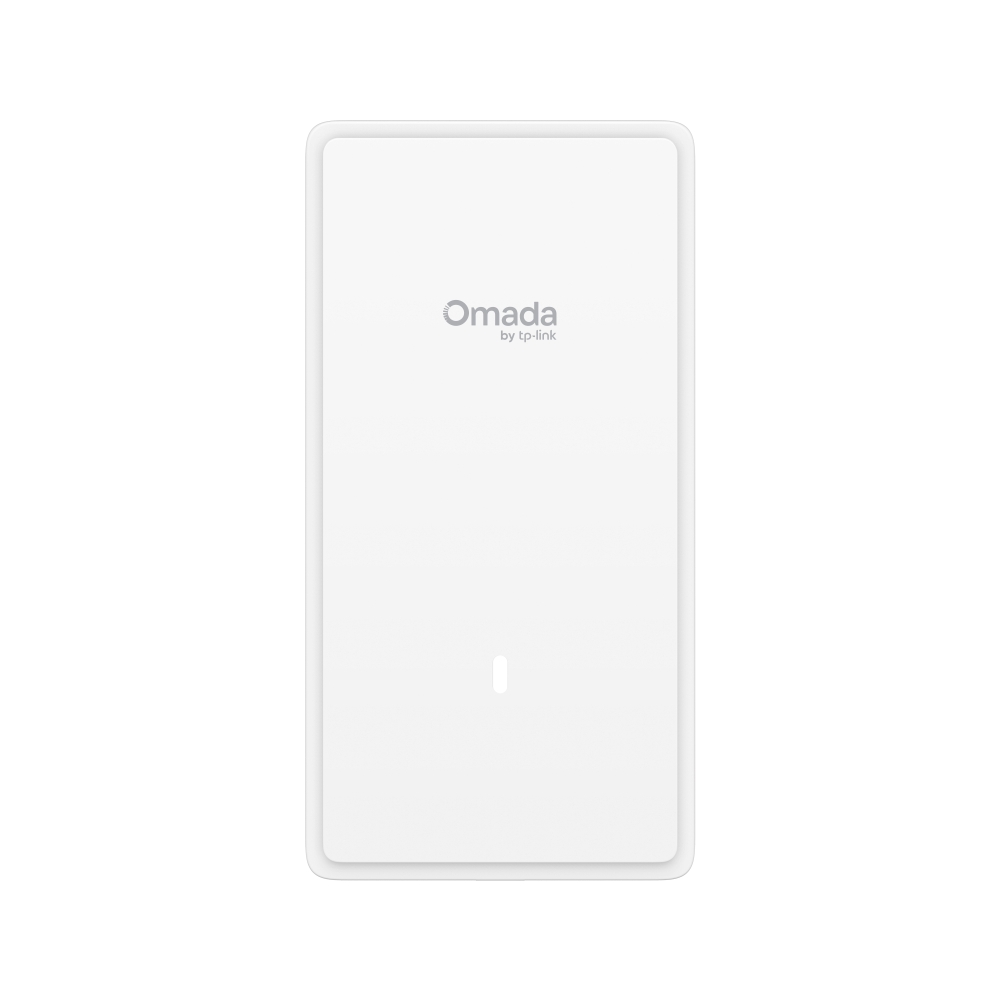
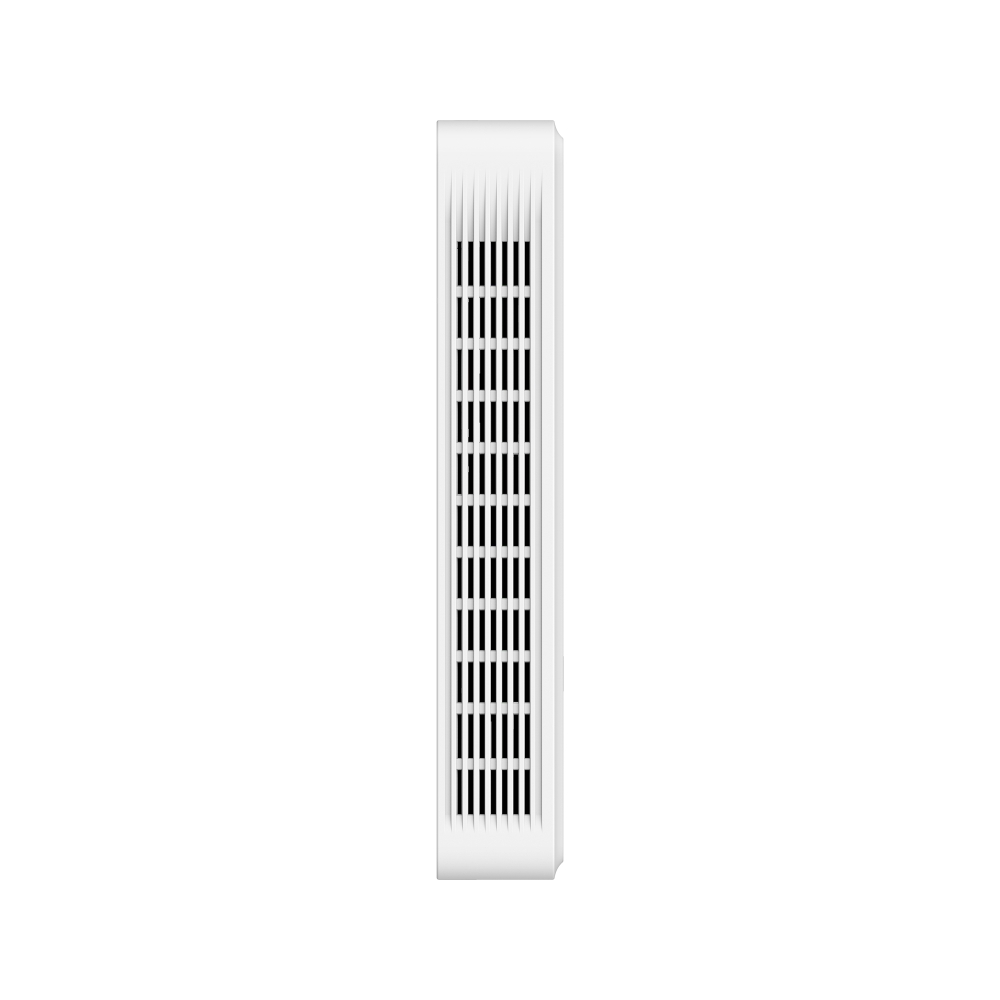
BE5000 Wall Plate Wi-Fi 7 Access Point
- Dual-Band Wi-Fi 7: 4324 Mbps on 5 GHz and 688 Mbps on 2.4 GHz.†
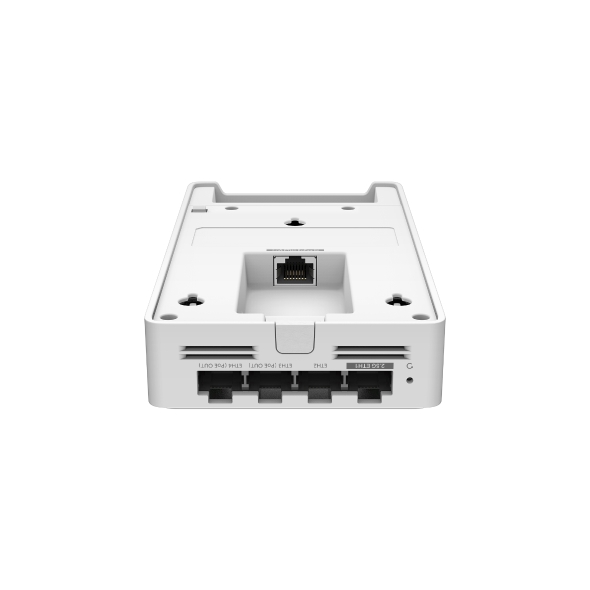
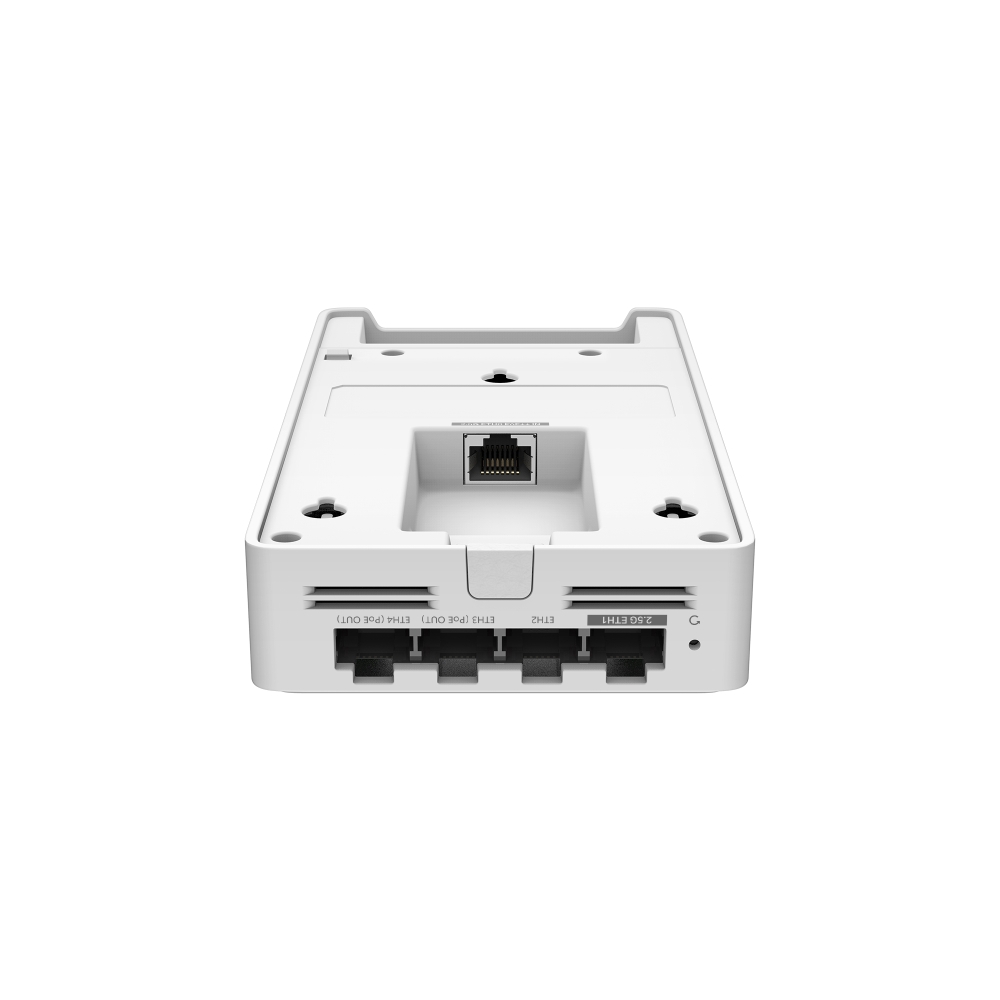
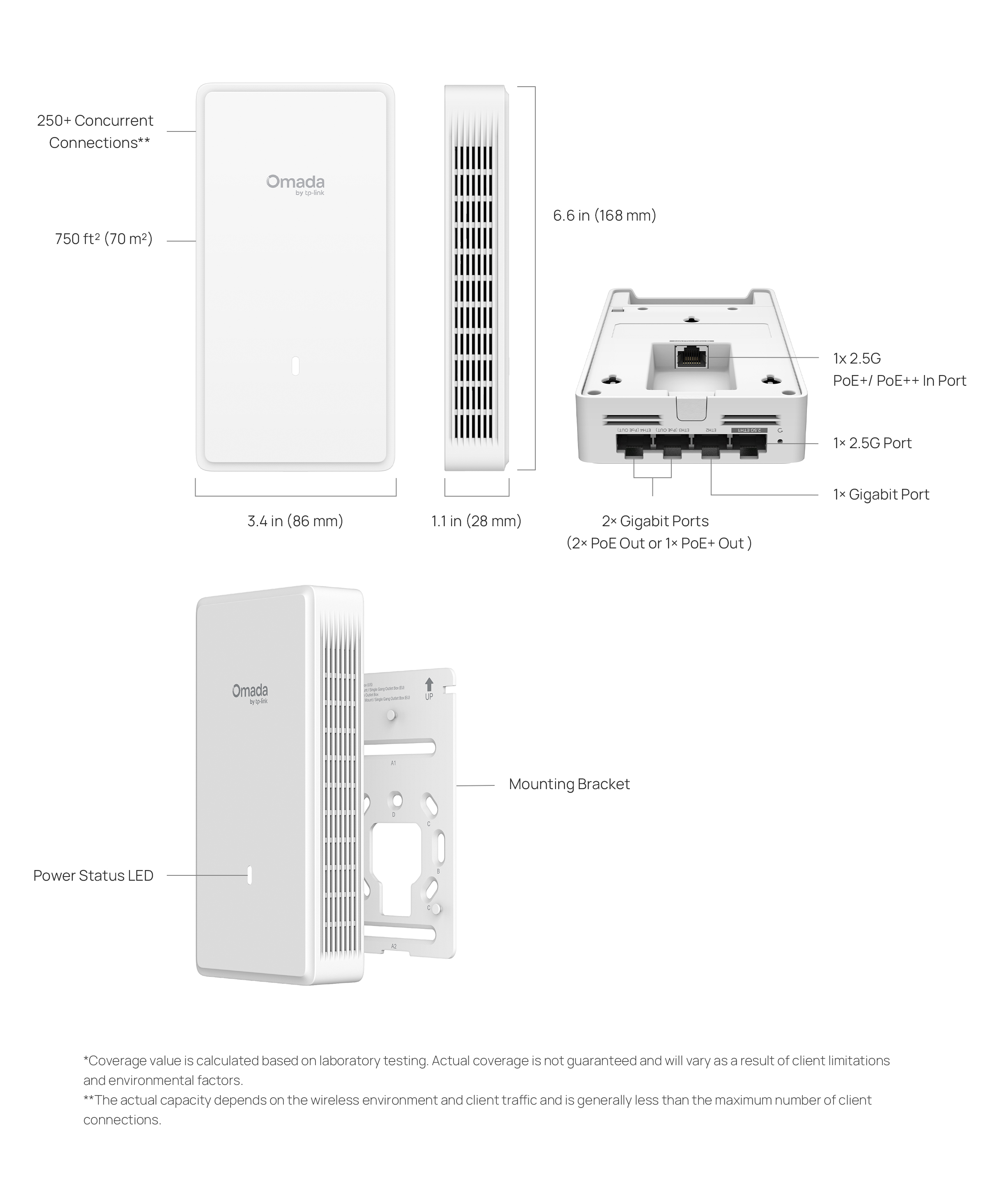
- Versatile Ports with PoE Flexibility: 2× 2.5G Ports (1× PoE+/PoE++ In) + 3× Gigabit Ports (2× PoE Out or 1× PoE+ Out#)
- Low Latency and Interference: Multi-Link Operation, Multi-RUs, and 4K-QAM deliver high-performance connectivity.‡
- Flexible Deployment and Easy Setup: Supports 802.3at/bt PoE Input for flexible installation with Omada SDN for one-click setup.
- More Connections and Wider Coverage: Supports 250+ concurrent connections* and covers up to 750 ft² (70 m²)** for reliable and extensive wireless connectivity.
- Advanced Features: Supports centralized cloud management, PPSK, multiple portals, mesh, and seamless roaming.§
Learn more about Omada Cloud SDN>
| HARDWARE FEATURES | |
|---|---|
| Interface | • Uplink: 1× 2.5G Ethernet Port• Downlink: 1× 2.5G Ethernet Port + 2× Gigabit Ethernet Ports (The 2.5G port supports PoE pass-through.) |
| Physical Security Lock | No |
| Button | Reset, LED |
| Power Supply | 802.3at/bt PoE |
| PoE Out | PoE Passthrough (Pins 1,2-; 3,6+)The PoE pass-through feature requires 802.3at/bt input. If the power consumption of the AP's downstream device exceeds 7W, the AP needs an 802.3bt input. |
| Max. Power Consumption | • 802.3bt: 17W (PoE Out support 15.4W)• 802.3at: 17W (PoE Out support 7W) |
| Dimensions ( W x D x H ) | 143 × 86 × 40 mm (5.6 × 3.4 × 1.6 in) |
| Antenna | 4× Internal Antennas• 2.4 GHz: 2× 4 dBi• 5 GHz: 2× 5 dBi |
| Bluetooth | V5.2 |
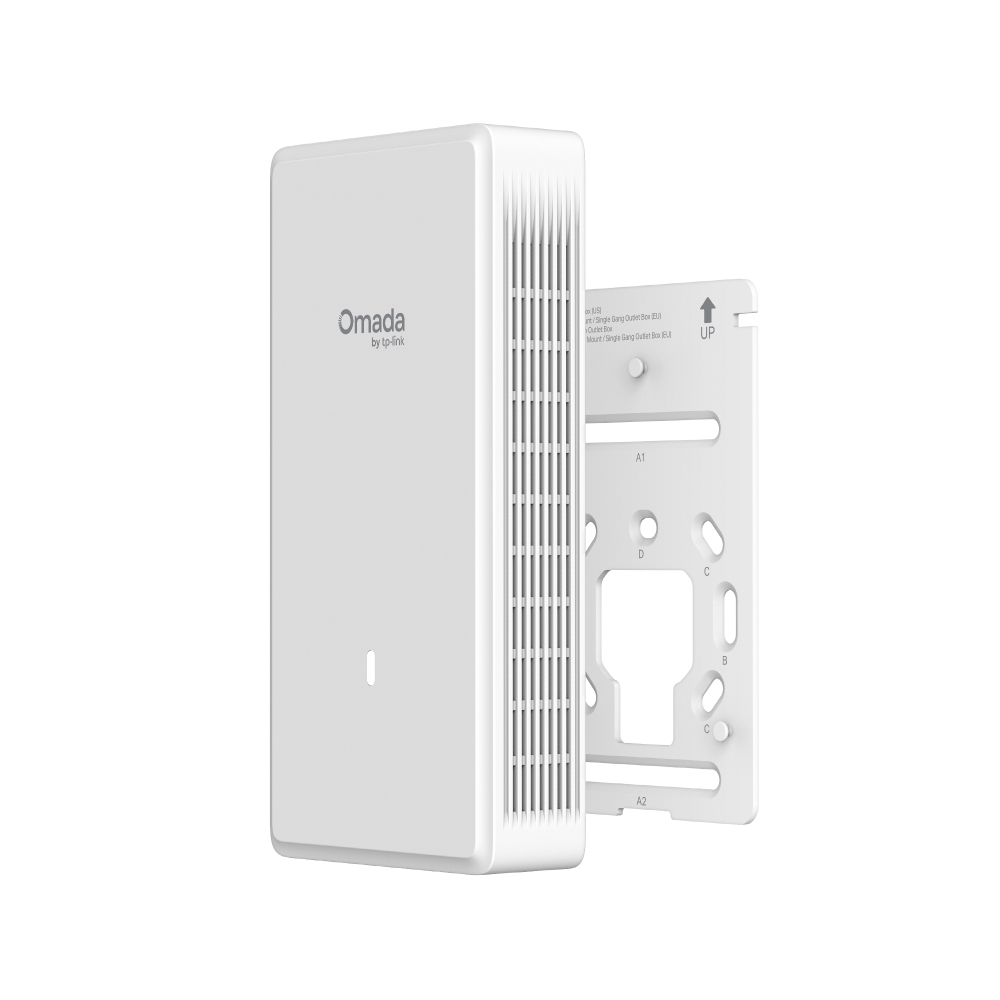
| Mounting | Wall Mounting (Screws included) |
| Management Features | |
|---|---|
| Omada App | Yes |
| Centralized Management | • Omada Cloud-Based Controller• Omada Hardware Controller• Omada Software Controller |
| Cloud Access | Yes. Require the use of an Omada controller. |
| Email Alerts | Yes |
| LED ON/OFF Control | Yes |
| Management MAC Access Control | Yes |
| SNMP | v1, v2c, v3 |
| System Logging Local/Remote Syslog | System Log |
| SSH | Yes |
| Web-based Management | Yes |
| L3 Management | Yes |
| Multi-site Management | Yes |
| Management VLAN | Yes |
| Zero-Touch Provisioning | Yes. Requiring the use of Omada Cloud-Based Controller. |
| WIRELESS FEATURES | |
|---|---|
| Coverage | 750ft² (70 ㎡)* |
| Concurrent Clients | 250+** |
| Wireless Standards | IEEE 802.11 a/b/g/n/ac/ax/be |
| Frequency | 2.4 GHz and 5 GHz |
| Signal Rate | • 5 GHz: Up to 4324 Mbps• 2.4 GHz: Up to 688 Mbps |
| Wireless Functions | • MLO‡• 4K-QAM‡• Multi-RUs‡• 240 MHz Bandwidth‡• 16 SSIDs (Up to 8 SSIDs on each band)• Enable/Disable Wireless Radio• Automatic Channel Assignment• Transmit Power Control (Adjust Transmit Power on dBm)• QoS(WMM)• Seamless Roaming△• Beamforming• Rate Limit (Based on SSID/Client)• Load Balance• Airtime Fairness• Band Steering• Reboot Schedule• Wireless Schedule• RADIUS Accounting• MAC Authentication• Wireless Statistics• Static IP/Dynamic IP |
| Wireless Security | • Captive Portal Authentication△• Access Control• Wireless Mac Address Filtering• Wireless Isolation Between Clients• VLAN• Rogue AP Detection• WPA-Personal/Enterprise, WPA2-Personal/Enterprise, WPA3-Personal/Enterprise |
| Transmission Power | 4-22 dBm (2.4GHz)4-22 dBm (5GHz, U-NII-1, U-NII-2A, U-NII-2C, U-NII-3/ISM) |
| OTHERS | |
|---|---|
| Certification | CE |
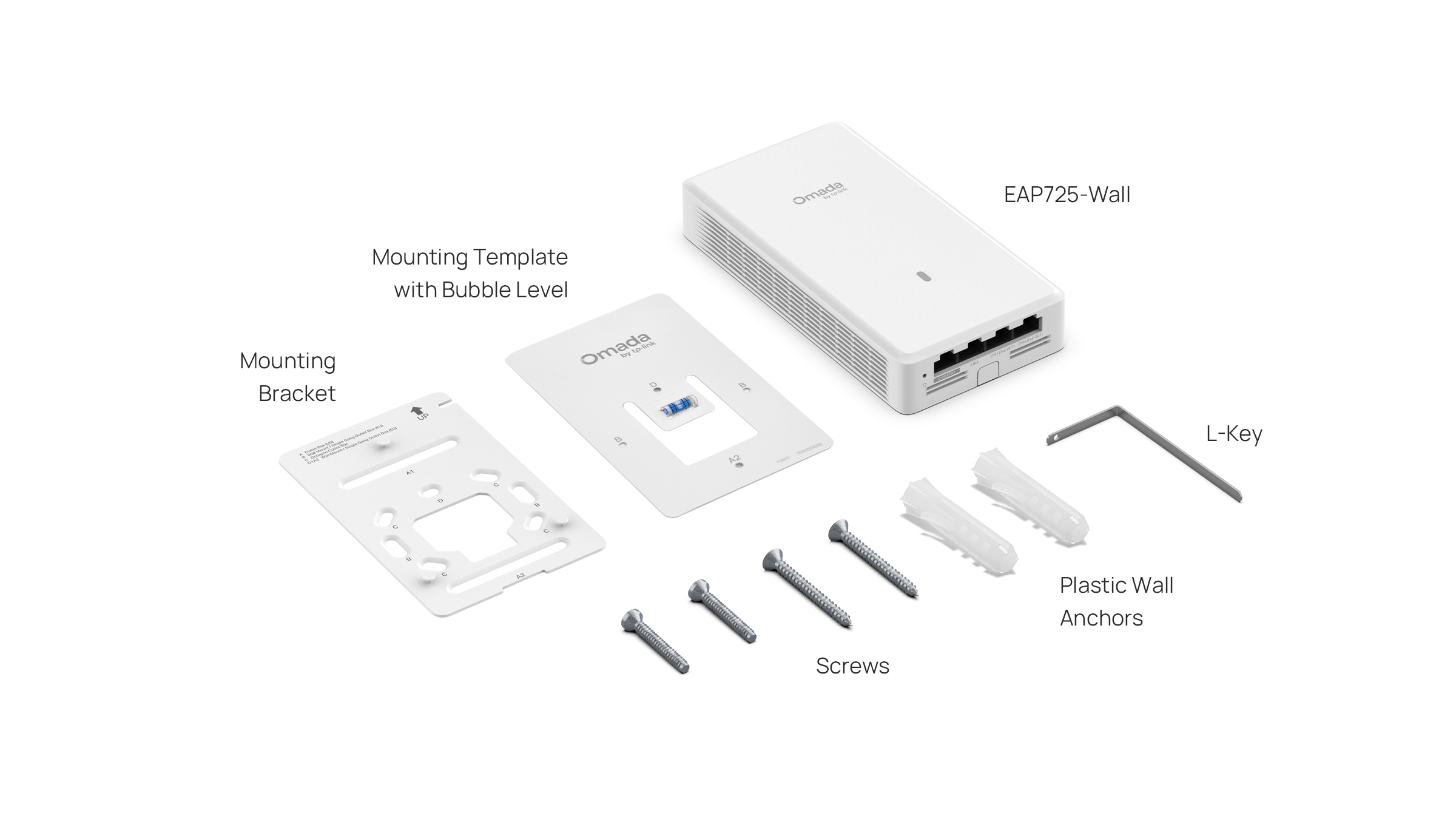
| Package Content | • EAP725-Wall• Installation Guide• Mounting Screws |
| System Requirements | Microsoft Windows XP, Vista, Windows 7, Windows 8, Windows10, Windows 11, Linux |
| Environment | • Operating Temperature: 0–40 ℃ (32–104 ℉)• Storage Temperature: -40–70 ℃ (-40–158 ℉)• Operating Humidity: 10–90% RH non-condensing• Storage Humidity: 5–90% RH non-condensing |
†Maximum wireless signal rates are the physical rates derived from IEEE Standard 802.11 specifications. The 240 MHz bandwidth and 160 MHz are only available on the 5 GHz band and may be unavailable in some regions/countries due to regulatory restrictions. Actual wireless data throughput, wireless coverage, and connected devices are not guaranteed and will vary as a result of internet service provider factors, network conditions, client limitations, and environmental factors, including building materials, obstacles, volume and density of traffic, and client location.
‡Use of Wi-Fi 7 (802.11be), Wi-Fi 6 (802.11ax), and features including Multi-Link Operation (MLO), 240 MHz Bandwidth, 160 MHz Bandwidth, 4K-QAM, Multi-RUs, OFDMA, and MU-MIMO requires clients to also support the corresponding features.
#Dual PoE output with a 6W total budget via 802.3at input (switches to single-port output if either port exceeds 3W), or dual PoE/single PoE+ output via 802.3bt input.
§These features require the use of an Omada controller.
*Actual capacity depends on the wireless environment and client traffic and is generally less than the maximum number of client connections.
**Coverage is calculated based on laboratory testing. Actual coverage is not guaranteed and will vary as a result of client limitations and environmental factors.