How Fast Is 5G Home Internet - And Is It Enough for Your Needs in the Philippines?
Published: December 10, 2024 · Last Updated: July 2026
Quick Answer:
-
5G home internet delivers download speeds of 100 Mbps to 1 Gbps, depending on band type: low-band 5G averages 50 to 250 Mbps, mid-band 100 to 900 Mbps, and high-band (mmWave) up to 10 Gbps under ideal conditions.
-
In the Philippines, Globe, PLDT, and Smart operate mid-band 5G in Metro Manila and key cities; actual delivered speeds vary by tower proximity and network congestion.
-
For most Philippine households doing streaming, WFH video calls, and gaming, mid-band 5G is fast enough, but fiber remains more consistent in areas where both are available.
5G home internet is now emerging as a serious competitor to broadband in Philippine homes, particularly in areas where fiber-optic infrastructure is limited, or installation timelines are long. But how fast is 5G home internet in practice, and is it enough to replace your current connection?
Table of Contents
5G vs Fiber: How They Compare in the Philippines
What Are the Advantages of 5G Home Internet?
Is 5G Home Internet Fast Enough for Your Needs?
Limitations of 5G Home Internet
Should I Get 5G Home Internet?
Where Can I Get 5G Home Internet in the Philippines?
Are 5G Home Internet and 5 GHz Wi-Fi the Same?
TP-Link 5G Home Internet Devices
What Is 5G Home Internet?
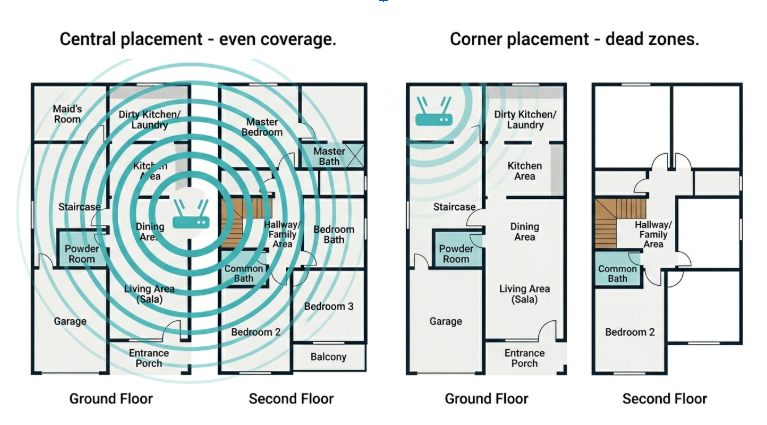
5G home internet uses the same 5G technology that powers your mobile phone. Instead of delivering cellular connectivity to your smartphone, it powers your entire home network through a 5G router or modem that communicates with nearby 5G towers.
Unlike traditional broadband connections that rely on fiber-optic or cable networks, 5G home internet uses radio waves to deliver internet access directly to your home. All you need is a 5G home router with a SIM card slot, no technician visits to run cable through walls, and no waiting for fiber infrastructure to reach your building.
For Philippine households in condos or subdivisions where PLDT Fibr or Converge have not yet deployed fiber lines, technologies like 4G LTE and now 5G home internet provide a meaningful fixed broadband alternative.
How Fast Is 5G Home Internet?
The speed of 5G home internet depends on which band your provider uses in your area. All three band types are faster than 4G LTE but differ significantly in speed and coverage.
|
5G Band Type |
Download Speed Range |
Coverage |
Best For |
|---|---|---|---|
|
Low-band (Sub-6 GHz) |
50 to 150 Mbps typical |
Wide coverage, most available in PH |
Basic to mid-range household use |
|
Mid-band |
150 to 600 Mbps in strong signal areas |
Metro Manila, Cebu, Davao, and major urban centers degrade outside city limits |
Multi-device households, streaming, WFH |
|
High-band (mmWave) |
Up to 10 Gbps (theoretical peak only) |
Not commercially deployed for residential use in the Philippines |
Not applicable for PH home internet |
The incredible speed potential of 5G is most accessible on mid-band connections. It can deliver download speeds competitive with entry-level fiber plans in Metro Manila. Globe AT HOME WiFi leads the 5G FWA category in the Philippines, according to Opensignal's September 2025 Fixed Broadband report, while Smart Home WiFi's 5G plans advertise speeds up to 600 Mbps, and DITO's WoWFi recorded an average 5G speed of 597.7 Mbps. High-band mmWave is not commercially deployed for home internet use in the Philippines.
The Philippine median fixed broadband speed is 105.17 Mbps, and the median mobile speed is 59.64 Mbps (Ookla, end-2025 via DataReportal Digital 2026). 5G home internet download speeds on mid-band connections can exceed the fixed broadband median in areas with strong tower proximity in Metro Manila, though speeds drop significantly in provincial areas and during 7-10 PM peak hours when towers are congested.
5G vs Fiber: How They Compare in the Philippines
|
Factor |
5G Home Internet |
Fiber Broadband |
|---|---|---|
|
Download speed |
100 to 900 Mbps (mid-band) |
100 Mbps to 1 Gbps |
|
Latency |
10 to 30 ms typical |
5 to 20 ms typical |
|
Availability |
Metro Manila + key cities; expanding |
Major urban areas and some provincial towns |
|
Installation |
Same-day SIM-based setup |
Technician visit: 1 to 14 days, depending on the ISP |
|
Consistency at peak hours |
Variable - affected by tower congestion 7-10 PM |
More consistent, dedicated line to the home |
|
Data caps |
Some plans have caps; check with the provider |
Most PLDT/Globe/Converge fiber plans are unmetered |
|
Portability |
Yes - SIM-based, usable at multiple locations |
No - fixed to one address |
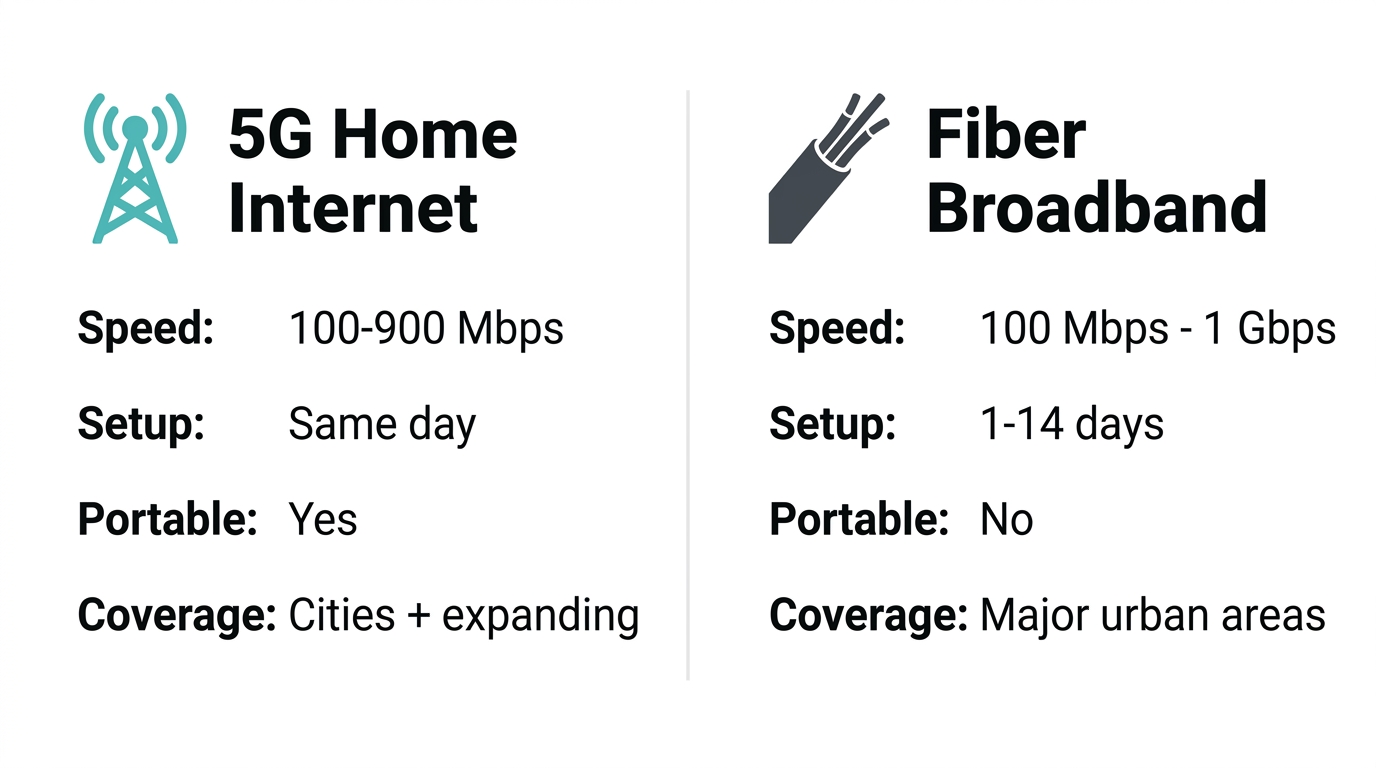
Speeds as high as 1 Gbps are achievable on both technologies under ideal conditions. For most Philippine households, fiber is the more consistent choice where available. 5G home internet is a better alternative where fiber is not yet deployed.
What Are the Advantages of 5G Home Internet?
-
Faster Speeds - 5G delivers faster download and upload speeds than 4G LTE and many traditional broadband connections. Mid-band speeds of 100 to 900 Mbps enable smooth 4K streaming, online gaming, and fast file downloads for Philippine households.
-
Low Latency - 5G offers significantly lower latency than older technologies. Latency on 5G networks can be as low as 1 ms under ideal conditions, with practical values of 10 to 30 ms in deployed Philippine networks, a meaningful improvement over 4G LTE for gaming and video calls.
-
No need for cables - Unlike fiber or such as DSL or cable broadband, 5G home internet does not require cabling infrastructure. Setup is SIM-based and same-day.
-
Flexibility and portability - A 5G home router with a SIM card can be moved between locations, particularly useful for OFW families, renters who move frequently, or households in provincial areas awaiting fiber deployment.
-
Faster installation - 5G networks can be set up far faster than fiber because no physical cables need to be laid. For Philippine households in condos with long fiber installation queues, this is a practical advantage.
Is 5G Home Internet Fast Enough for Your Needs?
Streaming TV and Movies
For households relying on Netflix, YouTube, and other streaming services, 5G home internet is more than sufficient. 4K streaming requires a minimum of 25 Mbps per stream, well within low-band and mid-band 5G speeds. For a household running 3 to 4 simultaneous 4K streams, mid-band 5G on a 200+ Mbps connection handles the load without buffering.
Working from Home
A stable 100 Mbps connection handles high-quality 1080p video calls on Zoom or Google Meet with room to spare. 5G's lower latency compared to 4G LTE also reduces the audio delays and video freezes that affect WFH professionals on older mobile broadband connections. For OFW families making daily video calls, mid-band 5G is a meaningful upgrade over 4G home broadband.
Smart Homes and IoT Devices
If you have a smart home with IoT (Internet of Things) devices, from smart speakers and thermostats to security cameras, 5G home internet provides the bandwidth and lower latency to keep everything connected and responsive. A 5G connection handles multiple HD security cameras streaming simultaneously without dropped frames, a common issue on congested 4G home broadband setups.
Large Households with Multiple Users
In Philippine households with multiple simultaneous users, students, WFH professionals, and gamers all online at the same time, mid-band 5G provides enough bandwidth for everyone. However, during 7-10 PM peak hours, when entire neighborhoods' devices are connected to the same 5G towers, congestion can reduce delivered speeds.
Limitations of 5G Home Internet
-
Availability - Technologies like 4G LTE and 5G coverage are not uniform across the Philippines. Globe, PLDT, and Smart have 5G deployed in Metro Manila, Cebu, Davao, and key provincial cities, but rural and semi-urban areas may not yet have reliable 5G signal strength for home internet use. Check your provider's coverage map before committing.
-
Network congestion - During 7-10 PM peak hours, 5G towers in dense Metro Manila areas experience congestion that reduces delivered speeds. This is a shared infrastructure issue similar to ISP congestion on fiber, but more variable because 5G towers serve more users per node than a dedicated fiber line.
-
Equipment costs - Some home internet providers charge for 5G modems or routers upfront. Standalone 5G home routers like the TP-Link Deco X80-5G allow you to use any SIM card and avoid lock-in to a single provider.
Should I Get 5G Home Internet?
5G home internet is the right choice for Philippine households in these situations:
-
You live in a condo or at an address where fiber has not yet been deployed by PLDT, Globe, or Converge.
-
You need a same-day internet setup without waiting for a technician visit.
-
You move frequently or need a portable connection you can take with you.
-
You are in a mid-band 5G coverage area and want fiber-competitive speeds without a fixed-line contract.
If fiber broadband is available at your address and you do not need portability, fiber remains the more consistent option. A dedicated fiber line is not affected by tower congestion during peak hours.
Where Can I Get 5G Home Internet in the Philippines?
Globe, PLDT Home, and Smart offer 5G home internet plans across Metro Manila and key urban areas. Plan availability, data caps, and delivered speeds vary by location. Always check the provider's coverage map for your specific barangay before subscribing.
If you want to use a standalone 5G home router with any Philippine SIM card, the TP-Link Deco X80-5G lets you insert your SIM directly and distribute the 5G signal as Wi-Fi throughout your home. This approach works with Globe, Smart, and DITO SIM cards and avoids provider lock-in.
Are 5G Home Internet and 5 GHz Wi-Fi the Same?
No, 5G home internet and 5 GHz Wi-Fi are entirely different technologies. 5G home internet is how your connection arrives at your home: your router communicates with outdoor 5G towers via a SIM card to receive the internet signal. 5 GHz Wi-Fi is how your router distributes that connection to devices inside your home using the higher-frequency Wi-Fi band.
In simple terms, 5G is the connection coming in from outside. 5 GHz Wi-Fi is the signal your router broadcasts inside your home. A TP-Link Deco X80-5G does both, bringing in 5G internet and distributing it as Wi-Fi 6 throughout your home.
TP-Link 5G Home Internet Devices
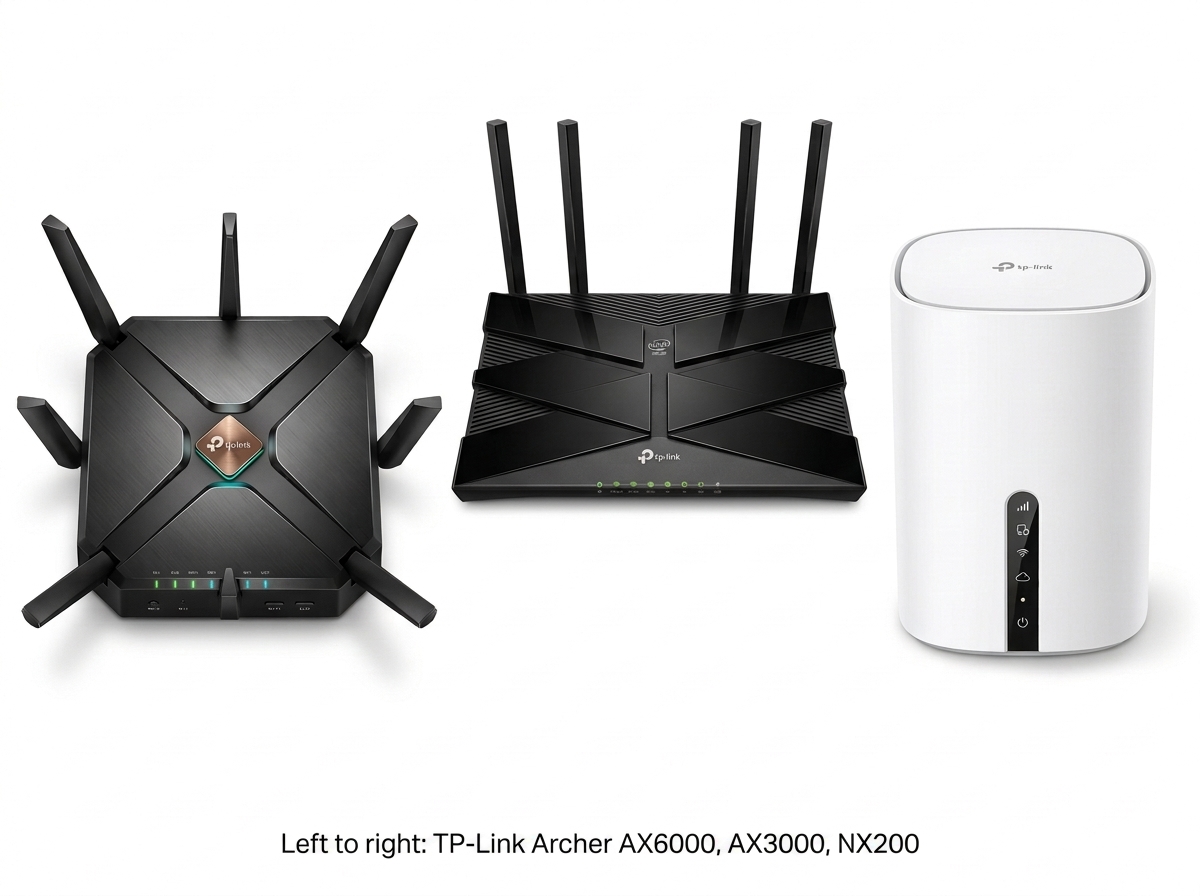
For the best performance with 5G home internet, explore TP-Link's range of Wi-Fi routers designed to work seamlessly with high-speed 5G connections.
Deco X80-5G (AX6000) - Provides comprehensive network protection, robust parental controls, and real-time IoT security. Intelligently learns your network environment to provide the ideal WiFi to your home. Supports This router supports both 5G and Wi-Fi 6 for whole-home coverage.
Deco X50-5G (AX3000) - 5G brings responsive network connections with only 1 ms latency. Supports Sub-6 GHz 5G technology and boosts download speeds up to 3.4 Gbps.
TP-Link Archer NX200 - Delivers download speeds up to 4.67 Gbps. Share your 5G network with multiple Wi-Fi devices and enjoy uninterrupted Ultra HD movies, fast file downloads, and smooth video calls.
Frequently Asked Questions
Is 5G home internet available everywhere in the Philippines?
5G home internet is available in Metro Manila and major cities like Cebu and Davao, but it is not yet nationwide. Globe, PLDT, and Smart have the widest 5G coverage among Philippine providers. Rural and semi-urban areas are still largely served by 4G LTE home broadband. Before subscribing, check your specific provider's coverage map for your barangay because tower proximity directly affects your delivered speed.
Can I use 5G home internet for gaming and streaming?
Yes, mid-band 5G is fully capable of supporting 4K streaming and online gaming. 4K streaming requires at least 25 Mbps, and competitive gaming needs sub-50 ms latency; both are achievable on mid-band 5G. The main variable for Philippine gamers is peak-hour tower congestion (7-10 PM), which can temporarily raise latency. Enabling QoS on your 5G router prioritizes gaming traffic even when total bandwidth is reduced.
Does 5G home internet have data limits?
Some Philippine 5G home internet plans include data caps, while others are unmetered. Check your specific plan before subscribing. Globe and Smart have offered both capped and unlimited 5G home plans. PLDT's fiber plans are generally unmetered. If heavy streaming and large file downloads are regular use cases in your household, confirm whether your plan has a fair-use policy that reduces speeds after a certain volume.
How does 5G home internet compare to fiber in the Philippines?
Both deliver 100 Mbps to 1 Gbps under ideal conditions, but fiber is more consistent at peak hours because each subscriber has a dedicated line. 5G towers are shared infrastructure; during 7-10 PM in dense Metro Manila areas, tower congestion reduces delivered speeds. 5G's key advantages are same-day setup, portability, and access in areas where fiber has not yet been deployed.
What is the difference between 5G home internet and 5 GHz Wi-Fi?
They are completely different technologies. 5G home internet is the cellular network connection that brings internet into your home via a SIM card communicating with outdoor towers. 5 GHz Wi-Fi is the frequency band your router uses to distribute that connection to devices inside your home. A 5G home router like the Deco X80-5G handles both; it receives the 5G signal and broadcasts it as Wi-Fi 6 inside your home.
What TP-Link device should I use for 5G home internet in the Philippines?
The Deco X80-5G is the best all-around choice for Philippine households needing 5G home internet with whole-home Wi-Fi 6 coverage. For smaller homes or tighter budgets, the Deco X50-5G covers the essentials with Sub-6 GHz 5G support. For maximum download speed on a single device, the Archer NX200 supports up to 4.67 Gbps. All three accept standard Philippine SIM cards from Globe, Smart, and DITO.
Is 5G home internet faster than my current fiber connection?
Not necessarily faster, but often comparable. Mid-band 5G delivers 100 to 900 Mbps, which overlaps with most Philippine fiber plan tiers. Fiber maintains more consistent speeds at peak hours because it is a dedicated line. 5G may actually deliver faster speeds during off-peak hours if you are near a tower. Still, fiber is the more reliable performer during the 7-10 PM congestion window in Metro Manila.
Final Thoughts
Many Philippine households are choosing 5G home internet for its high speeds, quick setup, and flexibility, particularly in areas where fiber deployment is still ongoing. For most use cases- streaming, WFH video calls, gaming, and smart home devices, mid-band 5G delivers speeds that are more than sufficient.
To get the most from your 5G home internet connection, pair it with a high-quality Wi-Fi device that can distribute that speed reliably throughout your home. TP-Link's range of Wi-Fi routers and 5G-compatible mesh systems is built to work with high-speed connections and handle the multi-device demands of Philippine households.
By Laviet Joaquin, Head of Marketing, TP-Link Philippines | Published: December 10, 2024 · Last Updated: July 2026